Chapter 4 · The Mill
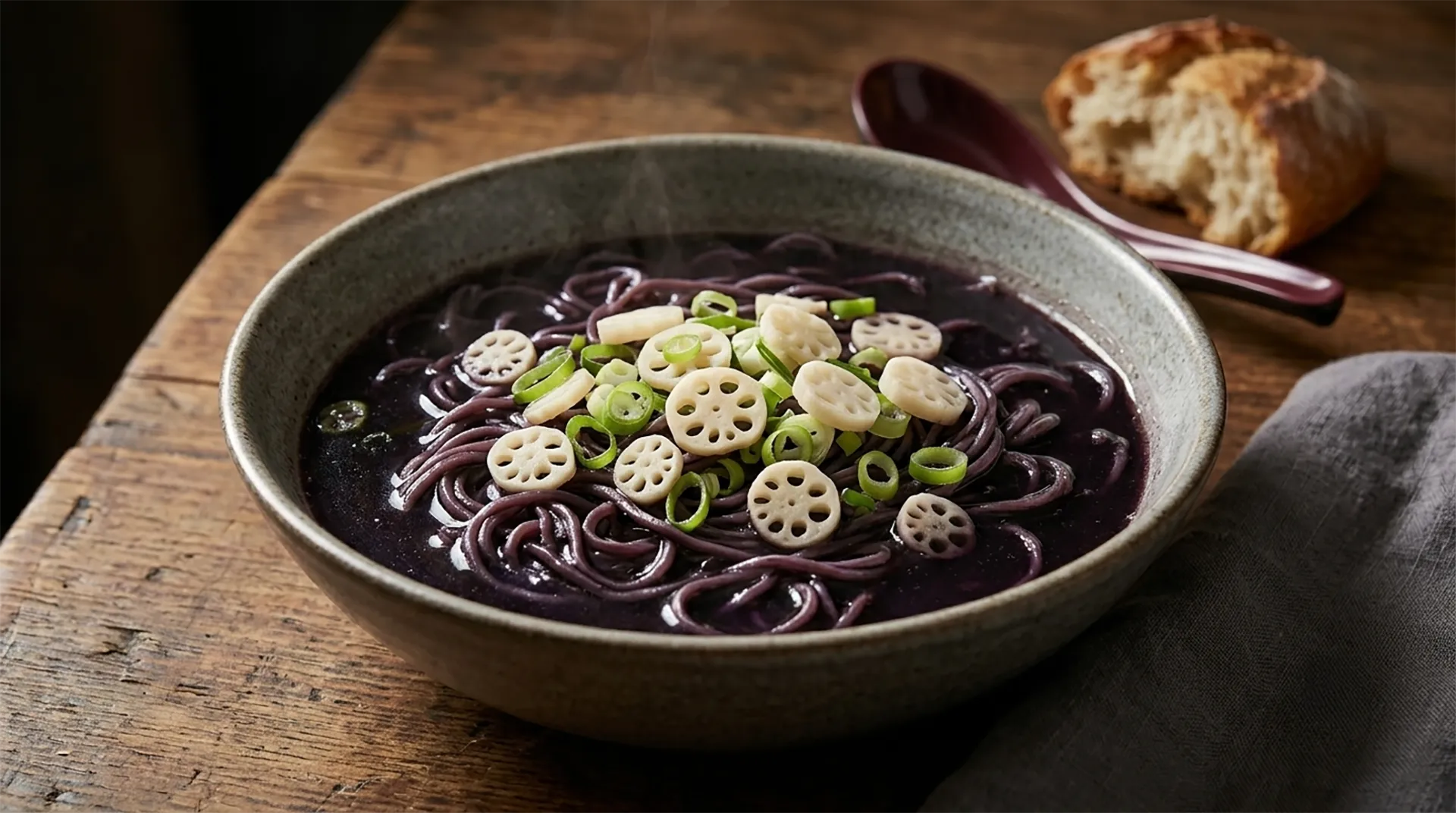
Black Water Ramen Noodles
A purple-black broth built from reserved black rice soak water, finished with crisp lotus root and a double-soy backbone.
Yield: 1 bowl (scale linearly) | Prep: 10 min | Cook: 10 min | Total: ~20 min
Headnote
This dish repurposes what would otherwise be discarded: the soak water left over from the Black Rice Squares variation on the Frozen-Fry Method (12-01). That water carries anthocyanin, the same water-soluble pigment that colors the rice itself, and anthocyanin is pH-reactive — it holds a purple-black tone in neutral-to-alkaline conditions and shifts toward pink-red under acid. Teaching Idea: pH-Reactive Pigment Control. The seasoning packet you choose is not a flavor decision alone — it’s a color decision. A low-acid packet (soy-based, savory) preserves the target purple-black; an acidic packet (citric acid, tamarind, tom yum-style) will visibly shift the broth toward pink before it ever reaches the bowl.
Ingredients
The Broth
- Reserved black rice soak water (from 12-01 Black Rice Squares variation), enough to cover the noodles
- 1 foil seasoning packet (from Ichiban Oriental Style or MAMA Pho — avoid tom yum-style or other acidic packets)
- Aged soy sauce, to taste
- Golden Mountain sauce, to taste
The Noodles & Garnish
- 1 pack Ichiban Oriental Style or MAMA Pho instant noodles
- 4–5 baby lotus rootlets, thinly sliced
- 1 scallion, sliced
Mise en Place (Action Checklist)
- Reserve the uncooked surplus black rice soak water from Black Rice Squares prep (12-01) — soak more than the cooking ratio needs, measure off only what the rice pot requires, and set the rest aside raw
- Slice lotus rootlets thin; hold in plain cold water (not acidulated) to prevent browning without disturbing broth pH
- Slice scallion for garnish
- Measure seasoning packet, aged soy sauce, and Golden Mountain sauce and have at the stove
Method
Phase 1: Cook the Noodles. Boil noodles separately in plain water per package time. Drain — do not rinse. The surface starch left behind helps the noodles grab the broth.
Phase 2: Build the Broth. Heat the reserved black rice soak water to a simmer. Stir in the foil seasoning packet. Add the lotus rootlet slices directly to the simmering broth for a brief blanch — just enough to soften the raw edge while keeping the crunch. Sensory cue: edges turn slightly translucent, center stays opaque and crisp. Season with aged soy sauce and Golden Mountain sauce, starting conservatively — the packet already carries salt.
Phase 3: Combine and Serve. Add the drained noodles to the hot broth. Warm through briefly. Ladle into a bowl. Top with sliced scallion. Serve immediately.
Chef’s Notes
- Noodle/packet choice controls color hold. Ichiban Oriental Style and MAMA Pho packets run low-acid, holding the broth at purple-black. Avoid tom yum-style or other acidic packets (citric acid, tamarind) — they shift the color toward pink.
- Do not acidulate the lotus root. The standard anti-browning hold (vinegar or lemon water) fights the broth’s color goal. Hold rootlets in plain cold water and work quickly, or blanch to order instead.
- This does not hold. Starch from the unrinsed noodles plus the rice water thickens the broth quickly once off heat — serve immediately.
- Aged soy / Golden Mountain sauce ratio: taste-and-adjust, no fixed ratio — both bring their own salt/umami load.
Glossary
- Anthocyanin: Water-soluble pigment found in black rice bran. Shifts color with pH — blue-black in neutral-to-alkaline conditions, pink-red under acid.
- Golden Mountain Sauce: A Thai seasoning sauce, soy-based, with a distinct savory-sweet profile used as a finishing umami accent.
- Aged Soy Sauce: Soy sauce fermented longer than standard, yielding a deeper, rounder flavor with less sharp salinity.